|
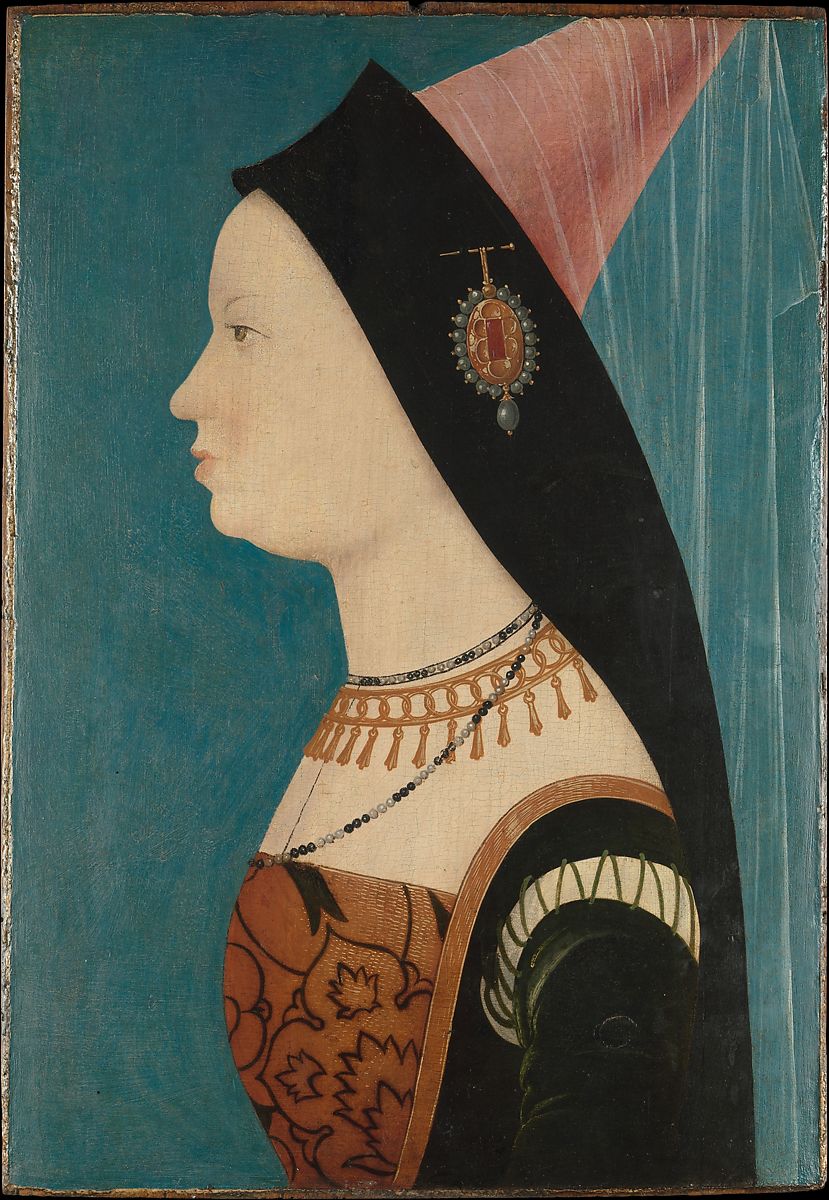
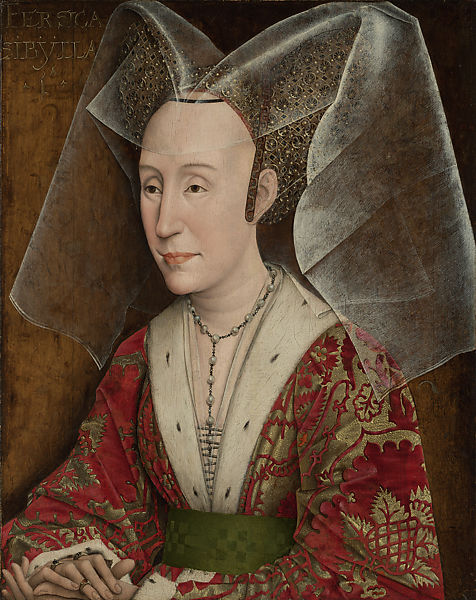
During the later middle ages young women wore cone shaped head wear called "Hennins". These hennins were either single or double cones worn on the head and sometimes draped in a veil. This often hall hat was held on the wearer's head by a small metal strap or tab that rested on the forehead to counteract the weight of the hat.
So, some of those medieval movies throughout history with their "princess hats" are somewhat correct! Maid Marion in Disney's 1973 animated Robin Hood wore a butterfly or double cone hennin. Her character designer, Ken Anderson, cheekily used her ears to create the shape. Your dress up "princess hat" is actually older than the medieval times as mentioned in a Smithsonian Magazine article. It is believed, at least the single cone hennin was designed with heavy influences from the Mongol married women's head coverings known as Boqta. These headdresses sat more vertically and according to some historical accounts made it very difficult for Mongol women to enter and exit their tents! Most were made out of wool or flannel, but some of the richer women had them made with red silk. 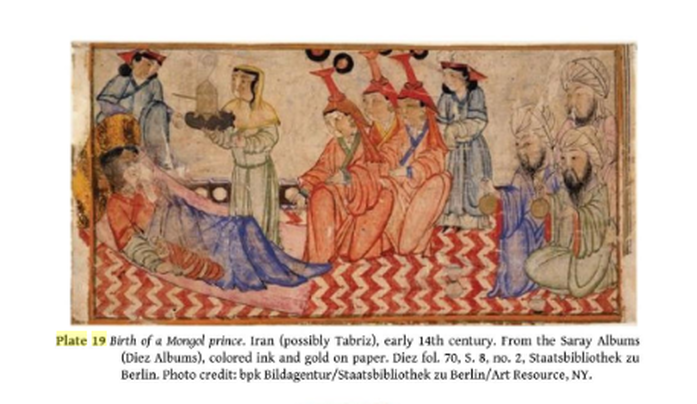 This plate from "Mongol Court Dress..." shows women wearing the very tall Boqta while at court. It is believed they did not wear them for riding or other manual labor. Why did ancient and not as ancient women want such tall head pieces. I can only imagine the headaches that came along with them. But, even more recent women have worn headpieces that added to their verticality. Fontages in the 1700s were so tall that some women DIED after they caught fire from the candelabras and chandeliers overhead. I guess what they say in Texas is right, "The taller the historical headpiece, the closer to the fashion god" ...or something like that. References:
0 Comments
While quarantining in my apartment during Covid-19 in New York I have made a habit of wearing a pair of plum cotton overalls to be comfy but to also wear actual clothes instead of a pair of joggers or my pajamas. This got me thinking, "What is the history of the overall?" In the US we call the garment that consists of trousers with a front bib and over shoulder straps "overalls". They are traditionally made out of canvas or denim and used as a work garment, but they can also be made of cotton or another fabric. "Overalls" are not to be confused with "coveralls" which is like a "onesie" or "boiler suit". "Coveralls" are an all-in-one garment that includes sleeves and can be seen as a uniform for mechanics, painters, etc.
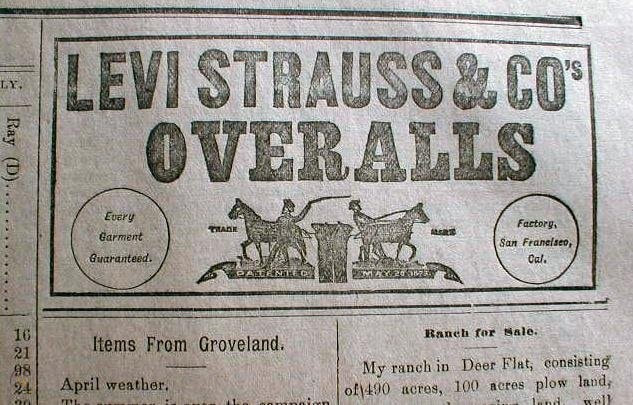
"Slops" could be considered the first iteration of overalls in history, even before Mr. Strauss created his denim marvels. Workers, uniformed personnel, and the lower class tend to wear the style of garments once worn by the upper class decades before. The "slops" I am referring to are oversized trousers worn by workers and sailors in the 1700s; not the high court "slops" or "gallygaskins" of the men of court in the early 1600s. They were worn as protection while working in fields, or sailing (as not to soil their sailor uniform). Overalls were a piece of work wear from their inception until roughly the 1940s when young boys and some girls would wear the garment as play clothes. They were considered outdoor wear still, but made less rigid and a little more "in fashion" with the time. 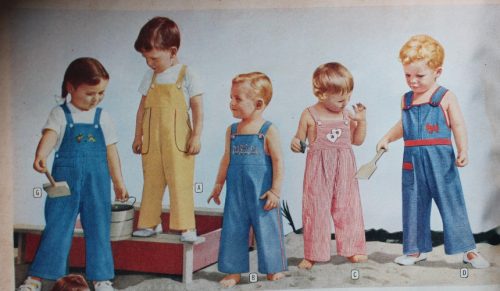 Today overalls are still worn by toddlers and children as they are an easy outfit to be put in and if your child is extra active, tends to stay on better than a pair of trousers and a shirt. Overalls have also made their way onto runways and into high fashion as well as street wear. Brands from Madewell to designers like Yojhi Yamamoto have created their own versions of overalls for both men and women. Hip hop artists of the 80s and 90s wore them as well as the influencers and celebrities of today. Join me while staying at home and wearing overalls. Pair them with an oversize comfy jumper for a cozy cuddle, or add a sharp button front blouse/shirt to feel a more "at work" while working from home. Whether they are denim, cotton, or jersey, pop them on and enjoy! References:
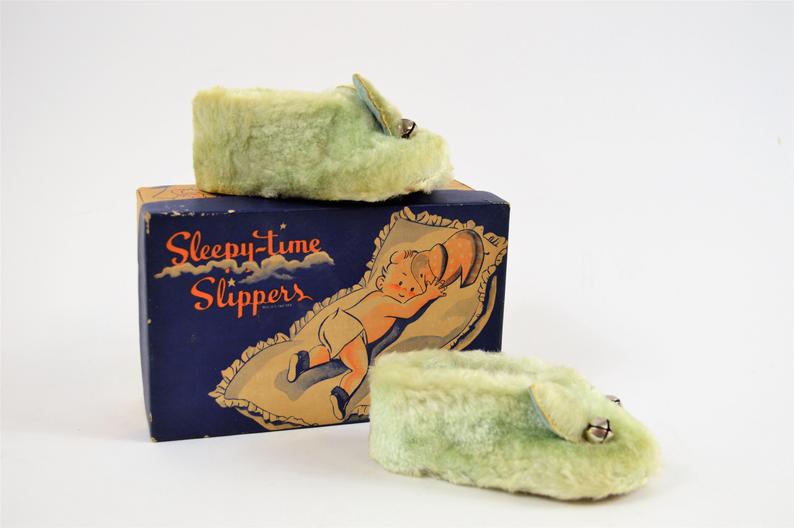
Many of us are familiar with the story of how the "Teddy Bear" came to be. If you aren't here is a refresher. Long story short, a toy producer started selling plush bears linked to former president Theodore "Teddy" Roosevelt. My question is how did these children's toys become rather hilarious slippers? Slippers themselves have a history; being worn in many different cultures over many different decades. Slippers have been worn as both indoor and outdoor wear, but in the west we tend to think of slippers as a comfortable at home shoe unless wearing them for pajama day at school. My first clue as to how long these bear slippers have been around was a Simplicity pattern I saw on sale on Etsy. Based on the printing and graphics of the pattern I placed it roughly in the 1980s. After cross referencing the item on a few different Etsy shops the vast majority sold it as a 1980s pattern. While there I also found a pair of Yogi Bear slippers from the 60s and a few versions of Care Bear slippers also from the 1980s. My favorite pieces of research to find are home photos or magazine ads. This is because they can give context to an item or fashion trend.
References:
-Good Housekeeping (Linked in article) -Various Etsy shops -The Chicago Daily Tribune |